

The Federal Board of Revenue has introduced a new policy allowing the use of confiscated luxury vehicles in anti-smuggling operations. This decision represents a practical step toward utilizing seized assets more effectively while strengthening enforcement capabilities. Instead of letting such vehicles remain unused or tied up in long disposal processes, the authorities have decided to put them into operational use where they can serve a clear purpose.
Govt Announces Huge Decrease in Diesel Price But No Change in Petrol Yet
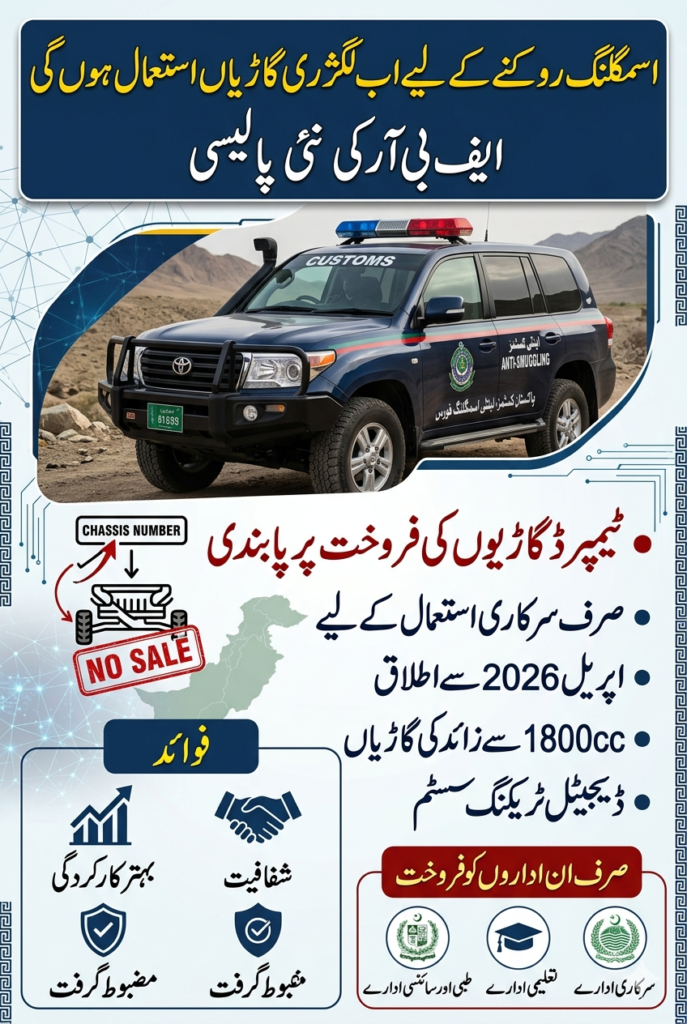
This policy, effective from April 2026, focuses on vehicles with engine capacities above 1800 cc, particularly those classified as tampered vehicles. These are vehicles with altered or irregular chassis numbers, which makes their resale in the open market difficult. By assigning them to official use, the government aims to improve efficiency while maintaining transparency in handling confiscated assets.
Understanding the Policy Framework
The new framework has been introduced through a Customs General Order, outlining how confiscated vehicles will be managed and utilized. The policy provides a structured approach to ensure that these vehicles are not misused and are allocated based on operational needs.
Under this system, anti-smuggling and enforcement units will be the primary users of these vehicles. These units often operate in challenging environments and require reliable transport to carry out their duties effectively. The availability of high-capacity vehicles can significantly improve their performance in such areas.
The policy also extends to certain customs formations working in remote or hard-to-reach locations. These include border areas and regions where terrain and conditions demand more powerful vehicles for effective mobility.
Prime Minister Visits Qatar for Important Talks
Deployment in Remote and Border Areas
One of the key highlights of the policy is the focus on deploying these vehicles in remote and border regions. Areas such as Balochistan and Khyber Pakhtunkhwa have several customs stations located in difficult terrains. These locations require durable and high-performance vehicles for patrolling and enforcement activities.
By allocating confiscated luxury vehicles to these regions, the authorities aim to strengthen monitoring and control over smuggling routes. Improved mobility can help enforcement teams respond quickly to suspicious activities and enhance overall security.
This approach ensures that resources are directed where they are most needed, rather than being underutilized in storage facilities.
Regulating the Use of Tampered Vehicles
To ensure accountability, the FBR has introduced a uniform procedure for managing tampered vehicles. These vehicles are defined as those with altered chassis numbers, often making them unsuitable for regular sale.
The new system ensures that such vehicles are handled in a transparent and controlled manner. Detailed records will be maintained, including forensic reports, photographs, and vehicle condition. This information will be stored in a digitized database for monitoring and auditing purposes.
The introduction of a digital tracking system is a significant step toward improving transparency. It allows authorities to keep track of each vehicle from seizure to final disposal, reducing the chances of misuse or mismanagement.
Punjab Introduces Mobile Biometric Verification for Arms Licences
Restrictions on Public Sale
An important aspect of the policy is the restriction on selling these vehicles to private individuals. The FBR has clearly stated that tampered vehicles will not be sold in a personal capacity under any circumstances.
Instead, eligible buyers include government and semi-government departments, as well as public institutions such as educational, medical, and scientific organizations. This ensures that the vehicles remain within the public sector and are used for official purposes.
The sale or transfer process will follow a defined procedure to maintain fairness and transparency. This controlled approach helps prevent unauthorized use and ensures compliance with legal requirements.
Allocation and Approval Process
The allocation of vehicles will be based on operational requirements. Customs formations seeking vehicles must submit detailed proposals explaining their needs. These proposals will include factors such as staffing levels and the nature of operations.
A committee headed by a senior official will review these requests and approve allocations accordingly. This ensures that decisions are made based on merit and necessity rather than arbitrary distribution.
Regular reviews will also be conducted to assess ongoing needs. If a department’s requirements change, it can submit revised requests for consideration. This flexible approach allows the system to adapt to evolving operational demands.
University Starts Electric Bus Service for Student Travel
Lifecycle and Disposal of Vehicles
The policy also addresses what happens to these vehicles at the end of their service life. Once a vehicle is no longer roadworthy or operational, it may be dismantled following proper procedures.
Departments using these vehicles are required to return them to customs authorities when they are no longer usable. This ensures that the disposal process remains centralized and regulated.
In some cases, vehicles such as buses or vans that cannot be sold may be transferred free of cost to public institutions. This provides additional value by supporting sectors such as education and healthcare.
If any vehicle remains unused for an extended period, it will be dismantled according to government-approved guidelines. This prevents unnecessary accumulation and ensures efficient resource management.
Benefits of the New Policy
This policy offers several advantages for both the government and the public sector. It promotes efficient use of confiscated assets, reducing waste and improving operational capacity.
By strengthening anti-smuggling efforts, it also contributes to better law enforcement and economic stability. Smuggling can have serious impacts on revenue and local industries, so improved enforcement is a key benefit.
The introduction of a digital tracking system enhances transparency and accountability. It ensures that every vehicle is properly documented and monitored throughout its lifecycle.
Overall, the policy reflects a practical approach to governance, where available resources are used effectively to meet operational needs.
FAQs
What type of vehicles are included in this policy?
The policy applies to confiscated vehicles above 1800 cc, especially those with tampered chassis numbers.
Can private individuals purchase these vehicles?
No, these vehicles cannot be sold to individuals and are only available to government and semi-government organizations.
How will these vehicles be used?
They will be used by anti-smuggling and enforcement units, particularly in remote and border areas.
Is there a system to track these vehicles?
Yes, a digital database will be created to record and monitor all confiscated vehicles.
What happens when these vehicles are no longer usable?
They are returned to customs authorities and may be dismantled according to official procedures.
Suzuki GS 150 Now Available on Easy Monthly Installments
Final Words
The decision to use confiscated luxury vehicles for official operations reflects a thoughtful and resourceful policy direction. By turning seized assets into functional tools for enforcement, the authorities are addressing both operational needs and transparency concerns.
This initiative not only strengthens anti-smuggling efforts but also ensures that public resources are managed responsibly. With proper implementation and oversight, it has the potential to improve efficiency, accountability, and overall governance in a meaningful way.