
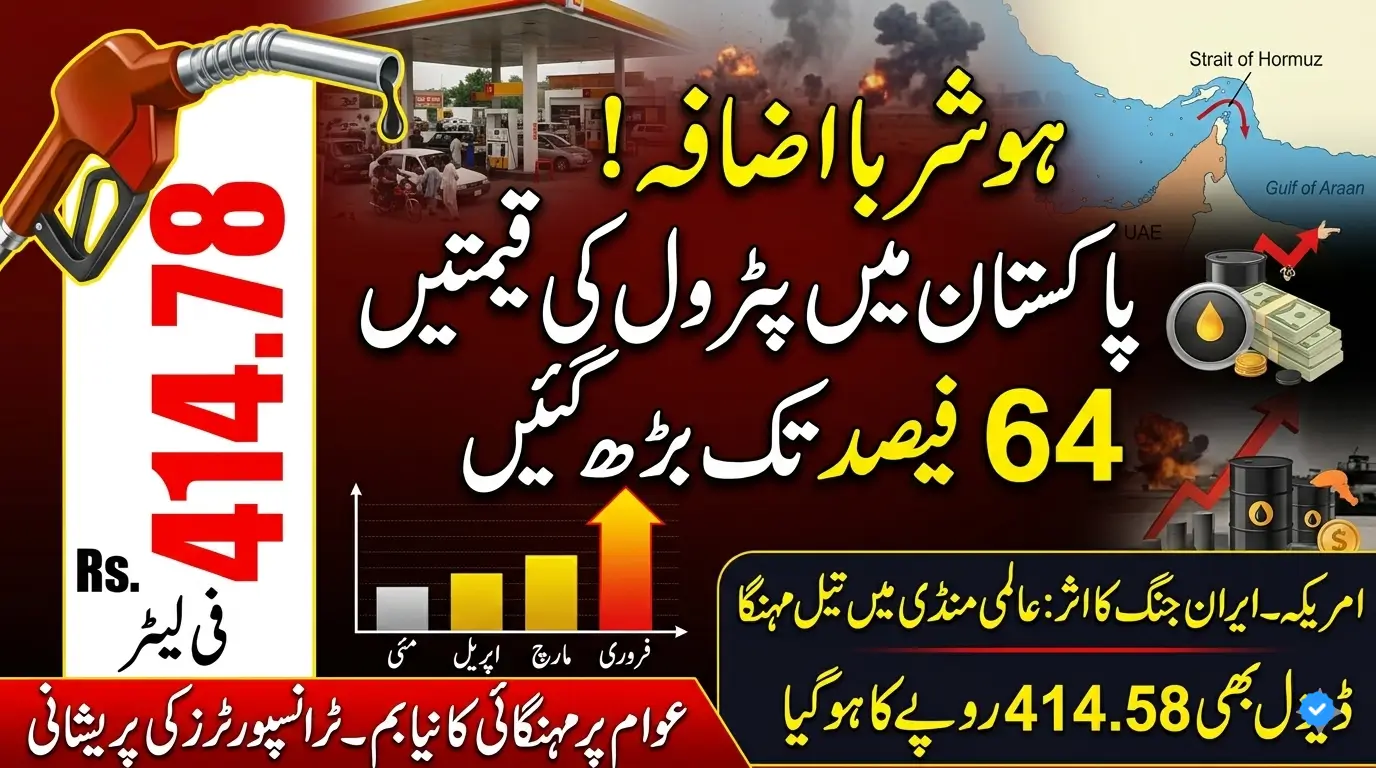
Petrol Prices in Pakistan Jump 64%
Pakistan has witnessed a massive rise in petrol and diesel prices over the last three months as global oil markets remained under pressure due to the ongoing US-Iran conflict. According to official figures released by the Ministry of Energy, petrol prices in Pakistan increased by nearly 64 percent between February and May 2026. The sudden increase has created serious concerns among citizens, transporters, and businesses already struggling with inflation and economic pressure.
Saudi Arabia Provides $2 Billion Support to Strengthen Economy
The latest government notification issued on May 9 confirmed that petrol prices reached Rs. 414.78 per liter, compared to Rs. 253.17 per liter on February 1. Diesel prices also experienced a major increase, climbing from Rs. 257.08 to Rs. 414.58 per liter during the same period. The sharp rise in fuel costs has directly affected transportation expenses, food prices, and the overall cost of living across the country.
Impact of the US-Iran Conflict on Oil Prices
The main reason behind the increase in fuel prices has been the ongoing tensions between the United States and Iran. Since late February, the conflict has created uncertainty in global oil markets, especially after fears emerged regarding possible disruptions in the Strait of Hormuz, one of the world’s most important oil shipping routes.
Oil traders and international markets reacted strongly to the situation. Brent crude oil prices quickly increased from around $70 per barrel to above $90, while at certain times prices even crossed $110 per barrel during periods of extreme market volatility. As Pakistan heavily depends on imported petroleum products, the rise in international oil prices directly increased domestic fuel costs.
Sharpest Fuel Increase in South Asia
Among major South Asian countries, Pakistan recorded one of the highest increases in retail fuel prices during this period. The rise in petrol and diesel prices in Pakistan was much faster compared to neighboring countries such as India and Bangladesh.
In India, state-owned oil companies reportedly absorbed part of the financial burden to protect consumers from large increases in fuel prices. Indian authorities tried to keep petrol and diesel rates relatively stable despite international market pressure. Similarly, Bangladesh introduced only limited fuel price adjustments and avoided repeated increases during recent months.
Punjab Govt Reveals Expected Summer Vacation Dates
Massive Increase in April
The biggest fuel price jump in Pakistan came in early April after tensions in the Middle East intensified. The government increased petrol prices from Rs. 321.17 per liter to Rs. 458.41 per liter within a short period due to fears of supply disruptions and uncertainty in global oil transportation routes.
This sudden increase shocked consumers and businesses nationwide. Public transport fares immediately increased in several cities, while transporters warned of further hikes in freight charges. Since transportation costs affect almost every product in the market, the increase also contributed to higher prices of food items, vegetables, and daily-use goods.
Pressure on Ordinary Citizens
The sharp rise in fuel prices has created additional financial pressure on ordinary Pakistanis. Families already facing inflation and electricity bill increases are now spending much more on transportation and daily necessities. Motorcyclists, car owners, and public transport users have all been affected by the rising petrol and diesel costs.
People working in delivery services, ride-hailing platforms, and transportation businesses are among the most impacted groups. Many small business owners say higher fuel expenses are reducing their profits and making it difficult to continue operations at normal rates. Rural populations are also suffering because transportation of agricultural products has become more expensive.
Iran Allows Qatari Ship Full of LNG to Clear Hormuz And Head to Pakistan
Effect on Inflation and Economy
Fuel prices play a major role in Pakistan’s economy because transportation and production costs depend heavily on petroleum products. When petrol and diesel prices increase sharply, inflation usually rises across multiple sectors. Businesses pass additional transport and operating costs on to consumers, resulting in more expensive goods and services.
Economists warn that continued high fuel prices may slow economic recovery and increase financial difficulties for low and middle-income families. Rising transportation costs can also affect exports, industrial production, and supply chains. At the same time, the government faces pressure to manage economic stability while dealing with expensive energy imports.
Why Pakistan Is More Vulnerable
Pakistan remains highly dependent on imported fuel and has limited foreign exchange reserves compared to larger economies in the region. This makes the country more vulnerable to sudden changes in international oil prices. Whenever global crude prices increase, Pakistan often has little choice but to raise local fuel prices to avoid additional financial pressure on the national budget.
Unlike some neighboring countries, Pakistan has less fiscal space to provide large fuel subsidies for long periods. Government officials argue that maintaining artificially low fuel prices could create further economic instability and increase pressure on foreign reserves.
Today Silver Prices and Market Rate Updates Across Major Cities
Regional Comparison
Regional comparisons show clear differences in fuel pricing strategies. India used state-owned oil companies to absorb part of the cost increase, helping protect consumers from major price shocks. Bangladesh adopted a more controlled approach and introduced only one major increase in April.
Pakistan, however, passed most of the international price increases directly to consumers through regular revisions in petrol and diesel prices. Analysts say this approach reflects the country’s difficult financial position and ongoing economic challenges.
Future Outlook for Fuel Prices
The future direction of fuel prices will largely depend on developments in the Middle East and the global oil market. If tensions between the US and Iran continue or worsen, international oil prices may remain high. Any disruption in the Strait of Hormuz could create further uncertainty and push prices even higher.
However, if ceasefire efforts succeed and regional tensions decrease, global oil markets may stabilize in the coming months. This could eventually provide some relief to fuel-importing countries like Pakistan. Experts say international diplomacy and regional stability will play a major role in determining future fuel trends.
Public Concerns and Government Challenges
The government now faces the difficult challenge of balancing economic realities with public concerns. Citizens are demanding relief from inflation and high fuel costs, while officials are trying to manage rising import expenses and financial obligations.
There is also growing debate about improving public transport systems, encouraging fuel-efficient vehicles, and investing in alternative energy sources to reduce dependence on imported oil. Energy experts believe Pakistan must develop long-term solutions to avoid repeated economic pressure caused by global fuel crises.
Islamabad Talks Are an Ongoing Process Says Iranian Envoy
5 Key Facts
- Petrol prices in Pakistan increased by 64 percent between February and May 2026.
- Petrol prices rose from Rs. 253.17 to Rs. 414.78 per liter during the three-month period.
- Diesel prices also increased sharply from Rs. 257.08 to Rs. 414.58 per liter.
- The biggest fuel price jump occurred in early April due to Middle East tensions.
- Pakistan recorded larger fuel price increases than India and Bangladesh during the same period.
Final Word
The sharp increase in petrol and diesel prices has become one of the biggest economic challenges for Pakistan during the ongoing US-Iran conflict. Rising international oil prices and uncertainty in the Middle East have placed enormous pressure on the country’s economy and ordinary citizens. While neighboring countries managed to limit fuel price increases through subsidies and controlled adjustments, Pakistan passed most of the burden directly to consumers due to financial limitations.
Latest FBR Customs Rates Announced for Smartwatches and Bands in