
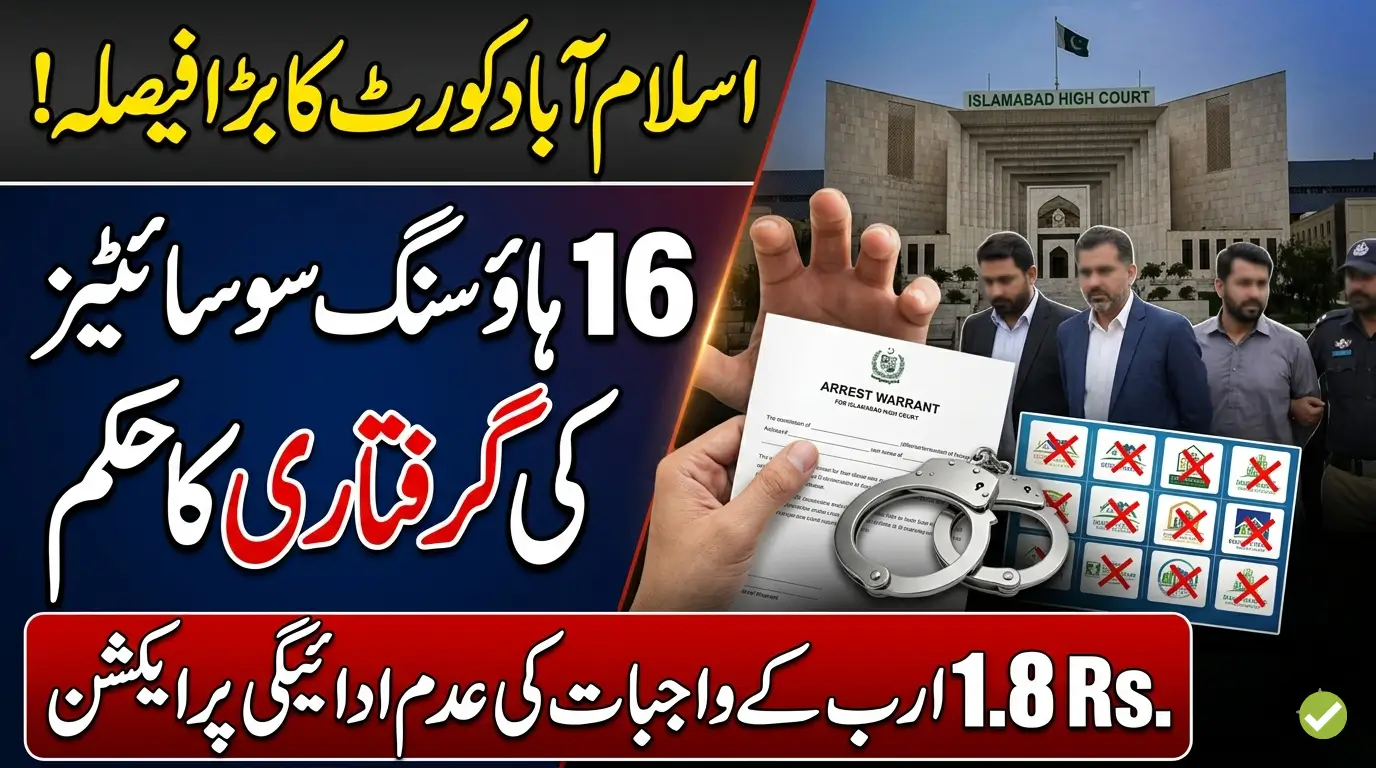
Islamabad Court Orders Arrest of Operators
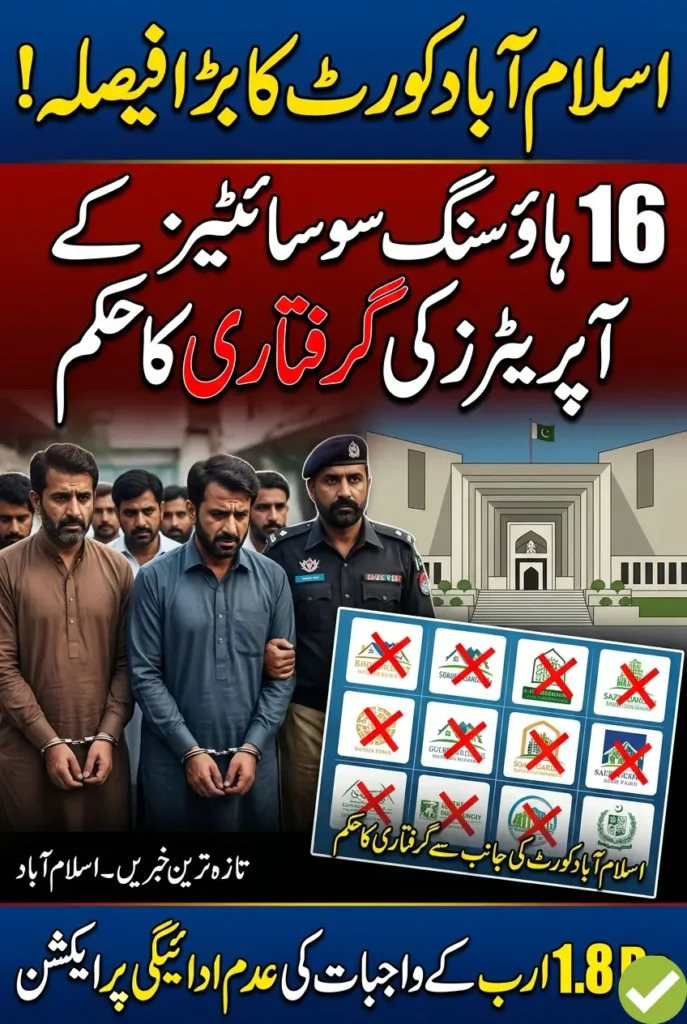
In a major development highlighting increased scrutiny of Pakistan’s real estate sector, a court in Islamabad has issued arrest warrants for the operators of 16 housing societies over unpaid dues totaling Rs. 1.8 billion owed to the Capital Development Authority CDA. This move represents a significant step by authorities to enforce financial discipline and accountability among private developers in the federal capital.
US-Iran Talks Likely to Resume in Islamabad Next Week
The case has attracted widespread attention due to the large amount involved and the inclusion of several well-known housing schemes. It also reflects mounting pressure on regulatory bodies to address long-standing issues of irregularities, weak oversight, and lack of transparency in the real estate sector.
Court Directives and Legal Proceedings
Senior Special Magistrate Sardar Mohammad Asif issued the arrest warrants and directed the relevant Station House Officers (SHOs) to take immediate action. The court has ordered that the responsible individuals be arrested and presented before it on May 14, indicating the urgency of the matter.
According to court officials, all legal requirements were fulfilled before issuing the warrants. The housing societies had been given ample time to settle their outstanding dues but failed to comply. As a result, the court proceeded with strict legal action. This shows that the decision was not sudden but followed a lengthy process involving warnings and official notices.
Nature of the Outstanding Dues
The unpaid Rs. 1.8 billion includes various charges owed to the CDA, such as extension fees and commercialization charges. These payments are a critical part of the regulatory framework governing housing developments in Islamabad, ensuring projects follow approved timelines and land-use policies.
Failure to pay these dues not only violates legal obligations but also affects the CDA’s ability to manage urban development effectively. The authority depends on such funds to support infrastructure projects and maintain public services in the capital.
IMF Approves $1.2 Billion Loan for Pakistan
Housing Societies Named in the Case
The case involves a mix of smaller and well-known housing societies. These include Account Group Officers Housing Scheme, Al Hamra Avenue, Bahria Town, Bahria Paradise Commercial Scheme, Capital Enclave, Gulberg Residencia, Jeddah Town, Overseas Pakistanis Foundation (OPF) Housing Scheme, River Garden, Senate Avenue, Soan Garden, Margalla View, Ministry of Interior Housing Scheme, Multi Garden-I, and Roshan Pakistan Corporation Housing Scheme.
The involvement of prominent projects has intensified public interest and raised concerns about compliance standards across the real estate sector. It also sends a strong message that regulatory action applies to all, regardless of size or reputation.
Focus on Responsible Individuals
When asked about high-profile figures linked to some of these societies, a court official clarified that the arrest warrants are likely directed at individuals responsible for financial management, such as finance managers or administrative staff.
This approach focuses on holding accountable those directly responsible for financial decisions and compliance failures, rather than targeting well-known owners without clear evidence of involvement.
Early Summer Vacations Expected in Punjab Schools Due to Extreme Heat
CDAs Role and Objectives
The CDA played a key role in initiating legal proceedings. The Housing Directorate referred the matter to the court after repeated failures by the societies to clear their dues despite multiple notices.
Officials have stated that the CDA’s main objective is to recover the pending payments, not merely to punish. Authorities have indicated that legal action could be avoided if the societies settle their dues promptly, suggesting that the crackdown is aimed at ensuring compliance rather than imposing penalties.
Broader Crackdown on Illegal Housing Societies
This case is part of a broader effort by the CDA to crack down on illegal and non-compliant housing schemes in Islamabad. Recently, the authority issued a public notice identifying 99 illegal housing societies and warned citizens against investing in them.
The move reflects growing concerns over fraudulent practices, unauthorized developments, and financial mismanagement in the real estate sector. By taking firm action, the CDA aims to restore public confidence and ensure that only approved and compliant projects operate in the market.
US President Trump Declares First Ever Russia-Ukraine Ceasefire in 4 Years
Impact on Investors and Homebuyers
The situation has important implications for investors and homebuyers. Legal actions like arrest warrants can create uncertainty and raise concerns about the safety of investments in affected housing schemes.
However, experts believe that stricter enforcement of regulations will ultimately benefit buyers by promoting transparency and accountability. Such measures can help create a more secure and trustworthy real estate environment in the long run.
Challenges in Regulating the Real Estate Sector
Pakistan’s real estate sector has long been difficult to regulate due to its scale, complexity, and involvement of multiple stakeholders. Common issues include illegal developments, project delays, and poor documentation.
This case highlights the need for stronger oversight and more effective enforcement of existing laws. It also emphasizes the importance of timely compliance by housing societies to avoid legal troubles and maintain their credibility.
Pumps Selling Old Petrol But Govt Still Pays for Fuel Not Even Imported Yet
Possible Outcomes and Future Developments
The court hearing scheduled for May 14 will be crucial. If the accused individuals are arrested and presented before the court, further legal proceedings will follow. On the other hand, if the societies clear their dues before the deadline, the matter could be resolved without extended litigation.
This case may also set a precedent for handling similar disputes in the future. A firm approach by authorities could encourage other housing societies to comply with regulations and avoid similar consequences.
Govt Raises Petrol and Diesel Prices Again Across Pakistan
FAQS
1. Why were arrest warrants issued?
Arrest warrants were issued due to the failure of 16 housing societies to pay Rs. 1.8 billion in dues to the CDA.
2. What types of dues are involved?
The dues include extension fees and commercialization charges required under CDA regulations.
3. Who is being targeted by the warrants?
The warrants are likely aimed at individuals responsible for financial operations within the housing societies.
4. Can the situation be resolved without arrests?
Yes, authorities have indicated that legal action may be avoided if the dues are cleared promptly.
5. What is the CDA’s main objective?
The primary goal is to recover pending payments and ensure compliance with regulations.
6. How does this affect investors?
While it may cause short-term uncertainty, stricter regulation can improve transparency and protect investors over time.
Final World
The Islamabad court’s decision to issue arrest warrants marks a significant step toward strengthening accountability in Pakistan’s real estate sector. While the move may seem strict, it highlights the importance of compliance with legal and financial obligations.
FIFA Triples Prices of Most Expensive 2026 World Cup Final Tickets